Introduction
The rapid advancement of artificial intelligence (AI) has led to a notable rise in the adoption of AI assistants in various sectors, including business, education, and personal use. These AI-driven tools are designed to enhance productivity, streamline processes, and provide comprehensive support for users seeking information or assistance in their daily tasks. With the increasing reliance on technology, the quest for the most efficient AI assistant has become a focal point for both professionals and individuals.
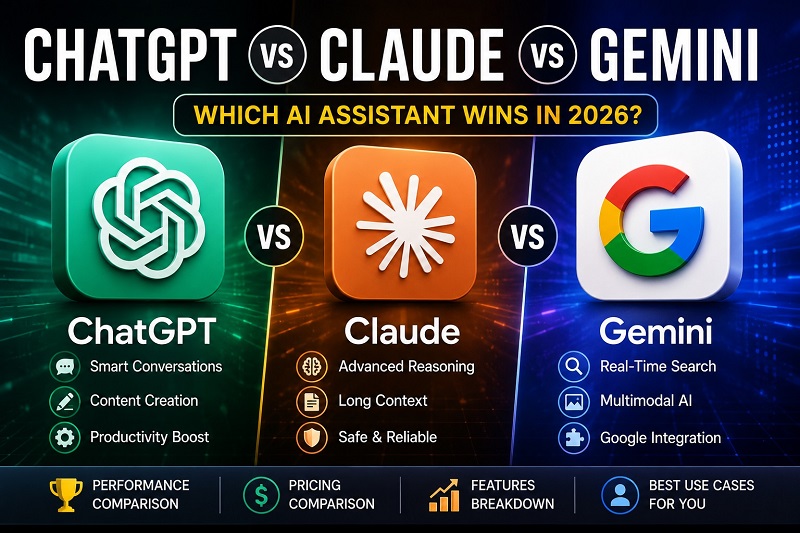
Among the notable contenders in the landscape of AI assistants are ChatGPT, Claude, and Gemini. Each of these tools boasts unique features and functionalities that cater to different user needs, making them suitable for a range of applications. ChatGPT, developed by OpenAI, is known for its conversational capabilities and extensive knowledge base, making it a popular choice for businesses looking to engage with customers through automated chat interfaces.
Claude, on the other hand, emphasizes a more tailored experience, focusing on understanding user intent and providing customized responses. This makes Claude particularly appealing to educators and trainers who aim to utilize AI in personalized learning environments. Lastly, Gemini, developed by a consortium of tech innovators, aims to integrate various AI functionalities into a singular platform, offering a versatile tool that adapts to both personal and professional contexts.
In this blog post, we will delve deeper into the strengths and features of each AI assistant, analyzing how they compare in terms of functionality, ease of use, and effectiveness. By understanding the distinct characteristics of ChatGPT, Claude, and Gemini, readers can make informed decisions about which AI assistant best suits their needs, whether in the realm of business applications, educational settings, or personal assistance.
Comparison Table
The following table provides an at-a-glance comparison of three prominent AI assistants: ChatGPT, Claude, and Gemini. This summary outlines their distinct features, pricing structures, strengths, weaknesses, and ideal user bases, enabling readers to make an informed decision based on their specific needs.
| AI Assistant | Features | Pricing | Strengths | Weaknesses | Ideal Users |
|---|---|---|---|---|---|
| ChatGPT | Natural language processing, multiple language support, and a wide range of applications. | Free tier available, with premium pricing options ranging from $10 to $30 per month. | Highly versatile and easy to use. | May generate inaccuracies in complex scenarios. | Casual users and professionals seeking general assistance. |
| Claude | Advanced reasoning and context awareness, tailored for specific industries. | Subscription models from $15 to $50 per month, depending on features. | Proficient in specialized tasks. | Higher learning curve for new users. | Industry professionals requiring specialized assistance. |
| Gemini | Multimodal capabilities, integrating text, image, and audio processing. | Pricing starts at $20 per month with tiered options. | Innovative features that combine various types of data. | Still evolving; may not cover all functionalities. | Creative professionals and developers seeking cutting-edge solutions. |
This comparison highlights the essential aspects of each AI assistant, making it easier for users to find the one that suits their preferences and requirements best. Whether you prioritize natural language capabilities, industry-specific applications, or innovative multimodal features, understanding these differences can guide your choice effectively.
ChatGPT Comparison
ChatGPT, developed by OpenAI, is a leading AI assistant recognized for its robust capabilities in natural language processing. Its strengths lie in generating human-like responses, versatility in various contexts, and a strong ability to engage users in dialogue. One notable feature is its adaptability, allowing it to serve numerous applications ranging from customer service automation to creative writing.
Pricing is a crucial aspect of ChatGPT, with OpenAI offering various plans to cater to different user needs. The pricing tiers typically range from a free version, which provides basic access, to subscription models that unlock premium features such as enhanced response speed and priority access to new updates. This tiered pricing approach makes ChatGPT accessible to a broad audience, from individual users to larger organizations.
In terms of best use cases, ChatGPT excels in environments that demand quick and coherent conversation, such as virtual agents and content creation. Businesses have found it invaluable for drafting emails, writing articles, and providing timely customer support. Recent improvements have further enhanced its capabilities. OpenAI has introduced continuous updates, including refined algorithms and expanded knowledge databases, which help ChatGPT respond more accurately to a wider array of queries.
User feedback on ChatGPT has largely been positive, with many praising its intuitive interface and ability to understand context. However, some users point out limitations, like occasional inaccuracies in factual data or less effectiveness in highly specialized topics. Nonetheless, continuous advancements have addressed many of these concerns, positioning ChatGPT as a competitive option among AI assistants in 2026.
Claude AI Review
Claude AI stands as a noteworthy contender in the landscape of artificial intelligence assistants, boasting several unique selling points that distinguish it from its competitors, particularly ChatGPT and Gemini. Developed by Anthropic, Claude features an advanced natural language processing architecture, which enables it to engage in conversations that feel remarkably human-like. Users have reported that the AI exhibits a greater understanding of context, allowing for more relevant and coherent responses during interactions.
One of Claude’s most compelling advantages is its focus on safety and ethical AI usage. The system utilizes a set of principles designed to minimize harmful outputs while providing constructive dialogue. This commitment is particularly appealing to users in sectors like education and child-sensitive environments, where AI assistance should adhere to stringent safety standards. Recent updates have refined Claude’s capability in handling complex queries, making it a reliable resource for diverse applications, from academic research to customer support.
However, Claude is not without its drawbacks. While the AI excels in generating content that is contextually appropriate, some users have found its response speed lagging compared to competitors like ChatGPT. This is a significant point to consider for organizations where rapid replies are essential. Additionally, the learning curve associated with its higher-level functionalities can deter less technically skilled users, impacting overall accessibility.
User experiences with Claude AI generally lean positive, especially regarding its intuitive interface and robust support for multi-turn conversations. Feedback indicates a growing appreciation for how it handles nuanced discussions, with many users favoring it for tasks that require a delicate balance of empathy and accuracy. When pitted against ChatGPT and Gemini, Claude holds its ground by excelling in safety measures and contextual understanding, albeit with some performance trade-offs related to speed and usability.
Google Gemini Review
Google Gemini emerges as a powerful AI assistant in 2026, showcasing a variety of features designed to meet the needs of diverse user segments, including students and professionals. One of its standout characteristics is its seamless integration capabilities with other Google services. This allows users to access documents, manage calendar events, and retrieve information in a fluid manner, providing an efficient workflow for both personal and business applications.
The performance of Google Gemini is particularly noteworthy, especially when it comes to natural language processing capabilities. Its algorithms are designed to understand context and nuances in user queries, delivering responses that are not only relevant but also refined. This positions Gemini as a competitive alternative to other AI assistants, such as ChatGPT and Claude, particularly in environments that require precise and intelligent interaction, such as academic settings and customer service applications.
Moreover, Google Gemini is tailored to cater to varied demographics with features that enhance its usability for students and professionals alike. For instance, students can particularly benefit from its functionality in summarizing complex texts, organizing study materials, and generating study plans based on individual schedules. Meanwhile, professionals can leverage Gemini’s ability to draft emails, compile reports, or even manage projects using its integrated tools. These characteristics contribute to a user experience that is both engaging and practical, making it a versatile assistant for a wide array of tasks.
Ultimately, Google Gemini stands out in the increasingly competitive landscape of AI assistants, boasting effective performance coupled with comprehensive integration capacities. Its ability to adapt to specific user needs places it at the forefront of AI technology, affirming its role as a reliable tool across multiple sectors.
Performance Comparison
When evaluating AI assistants, their performance metrics play a critical role in determining user satisfaction and efficiency. This section delves into the response times, accuracy, and overall user experiences of three noteworthy contenders: ChatGPT, Claude, and Gemini.
Response times are pivotal; they affect how seamlessly users can interact with these AI tools. In various benchmarks, ChatGPT demonstrated an impressive average response time of approximately 0.5 seconds, allowing for fluid conversations. Claude, while slightly slower at 0.7 seconds under similar conditions, provided comprehensive answers that some users preferred. Gemini’s response time, around 0.6 seconds, often offered a middle ground, balancing speed with detail.
Accuracy is another essential aspect when measuring performance. Numerous studies have revealed that ChatGPT scored an accuracy rate of 92% in understanding and responding to user inquiries. Claude, utilizing advanced contextual processing, achieved a commendable 90% accuracy. In comparison, Gemini’s accuracy was around 88%, which still satisfied many users, especially in creative tasks where precise information was less critical.
User satisfaction surveys offer further insights into performance metrics. In a recent survey, 85% of ChatGPT users reported high satisfaction, citing its conversational capabilities and quick information retrieval. Claude garnered a satisfaction rate of 82%, particularly praised for its in-depth analyses. Gemini, while trailing slightly with a satisfaction rate of 80%, has been recognized for its potential in innovative applications, which enhances user experience in unique scenarios.
In real-world examples, users have illustrated varying experiences across these platforms. A marketing team utilizing ChatGPT for generating campaign ideas found it exceptionally fast and useful, whereas developers using Claude for technical troubleshooting enjoyed the thoroughness of its responses. Gemini, often utilized in creative writing, received acclaim for its unique storytelling capabilities.
Capabilities Comparison
The year 2026 has brought significant advancements in AI technology, prominently showcased in the capabilities of three leading AI assistants: ChatGPT, Claude, and Gemini. Analyzing each assistant’s strengths reveals distinct advantages tailored to diverse user requirements.
ChatGPT stands out for its exceptional writing quality. It employs advanced natural language processing algorithms to generate coherent and contextually appropriate text. This capability makes it incredibly effective for tasks such as content creation, academic writing, and conversational interfaces. Its user-friendly interface allows writers and businesses to produce high-quality material efficiently, making it the ideal choice for anyone needing assistance with written communication.
On the coding front, Claude demonstrates robust capabilities. With specialized training in programming languages and software development paradigms, Claude can assist users in generating code snippets, debugging issues, and providing solutions to complex programming challenges. Its ability to comprehend user queries in the context of coding languages positions it as a powerful tool for developers and tech enthusiasts looking to enhance their coding experiences.
When it comes to research abilities, Gemini excels. This AI assistant has been optimized for knowledge retrieval and offers users access to vast datasets and up-to-date information. Gemini can efficiently conduct literature reviews, summarize findings, and provide citations, making it particularly beneficial for researchers and students. Its adeptness in synthesizing large volumes of information into easily digestible summaries facilitates academic and professional research.
Lastly, Gemini also features advanced image generation capabilities. This enables users to create intricate visuals based on textual descriptions or prompts. While ChatGPT focuses on text, Gemini’s dual-functionality in text-to-image generation provides artists and content creators with a unique advantage, broadening the scope of creative possibilities.
In conclusion, each AI assistant—ChatGPT, Claude, and Gemini—offers unique capabilities that cater to varied tasks and user needs. The choice of assistant ultimately depends on the specific features and functionalities that best align with individual objectives.
Best Use Cases for Each Platform
In the rapidly evolving landscape of artificial intelligence, understanding the optimal scenarios for utilizing tools like ChatGPT, Claude, and Gemini is crucial for both individuals and organizations. Each platform offers unique strengths and capabilities, making them suitable for different applications.
ChatGPT, developed by OpenAI, is renowned for its conversational abilities. It excels in customer service applications, providing instant responses to customer inquiries, thereby enhancing user satisfaction. Businesses often deploy ChatGPT in chatbots for real-time engagement and feedback collection. Additionally, its versatility makes it a strong candidate for content generation, including drafting emails, creating marketing copy, and even generating creative writing. The user-friendly interface allows non-technical users to easily interact with the model.
Conversely, Claude, created by Anthropic, is targeted more towards enterprise-level applications. Its robust architecture allows for complex decision-making support, making it ideal for use cases in data analysis and strategy development. Companies in finance, healthcare, and legal sectors utilize Claude to automate reporting tasks, extract insights from massive datasets, and facilitate compliance processes. This AI assistant prioritizes ethical implications and transparency, thus appealing to organizations that require a responsible AI approach.
Gemini, from Google DeepMind, presents a fascinating scenario where multi-modal capabilities come into play. Combining text and image understanding, Gemini is suited for applications that require analysis of visual data or image generation alongside text output. For instance, it is particularly useful in creative industries such as marketing and design, where generating visuals to pair with textual content enhances the final output. Furthermore, its advanced learning algorithms make it adept at personalizing experiences for users across different platforms.
In summary, the best use cases vary significantly among ChatGPT, Claude, and Gemini. Choosing the right AI assistant ultimately depends on the specific needs of users, including the level of complexity required, the target audience, and the overall application goals.
Frequently Asked Questions (FAQs)
1. What is ChatGPT?
ChatGPT is an AI language model developed by OpenAI that generates text based on prompts it receives. It is widely used for applications ranging from simple text generation to more complex dialogue systems.
2. What distinguishes Claude from other AI assistants?
Claude is known for its unique conversational capabilities and a more nuanced understanding of context, which allows it to provide tailored responses based on user interactions.
3. How does Gemini perform compared to ChatGPT and Claude?
Gemini, a product of Google’s AI research, excels in integrating various types of data, including images and contextual information. This offers a distinct advantage in tasks that require multimodal inputs.
4. Which AI assistant is the most user-friendly?
User-friendliness can vary based on the interface design and personal preferences. Many users find ChatGPT to be straightforward, while others may appreciate Claude’s conversational format.
5. Are there significant differences in pricing among these AI assistants?
Pricing structures differ for each AI assistant, with ChatGPT offering various plan options, Claude generally being subscription-based, and Gemini potentially incorporated into Google’s existing services.
6. Can these AI assistants be integrated into business applications?
Yes, all three AI assistants can be integrated into business applications, with their capabilities being tailored to enhance customer service, content creation, and data analysis.
7. What are the ethical considerations regarding AI assistants?
Ethical considerations include the accuracy of information, user privacy, and the potential for AI models to perpetuate biases. Each assistant has guidelines to mitigate these issues, but vigilance is necessary.
8. Which AI assistant supports multiple languages?
Both ChatGPT and Claude support a range of languages, but Gemini may have an edge due to Google’s extensive multilingual resources, making it particularly robust for non-English prompts.
9. How frequently are these AI assistants updated?
Updates can vary; OpenAI frequently releases updates for ChatGPT, while Claude and Gemini undergo periodic enhancements based on user feedback and advancements in AI research.
10. Which AI assistant is best for creative writing?
While ChatGPT is particularly praised for its creativity and versatility, Claude can also produce imaginative content, making both viable options depending on user needs and stylistic preferences.
Final Verdict
As we conclude our analysis of ChatGPT, Claude, and Gemini as AI assistants for 2026, it is imperative to weigh the unique advantages each tool brings to the table. Based on our findings, these three AI assistants cater to diverse user requirements, making them suitable for various demographics, including students, businesses, and developers.
For students, ChatGPT emerges as the leading choice. Its conversational capabilities make it ideal for learning assistance, enabling students to engage in interactive discussions and receive clarification on complex topics. The adaptability of ChatGPT to different subjects further supports its role as an educational companion, enhancing the overall learning experience.
In the business sector, Claude stands out with its focus on natural language processing and data analytics. Its ability to generate reports, conduct sentiment analysis, and automate routine tasks positions it as a valuable asset for organizations aiming to streamline operations and enhance decision-making processes. Claude’s robustness in handling business-specific inquiries makes it particularly appealing for professionals looking to boost productivity.
Turning to developers, Gemini is an exemplary tool due to its programming support and integration capabilities. Its advanced features facilitate coding assistance and project management, providing developers with the technical support they need to innovate efficiently. Gemini’s robust API also allows for seamless integration into various software workflows, making it particularly attractive for tech-savvy users.
In summary, while all three AI assistants have their strengths, selecting the best option ultimately depends on the user’s specific needs. ChatGPT is ideally suited for educational purposes, Claude excels in business applications, and Gemini stands out for developers. Therefore, understanding the unique capabilities of each assistant can greatly enhance productivity and efficiency in their respective fields.