Introduction
The concept of AI agents has emerged as a critical component in the technological landscape of 2026, marking a significant shift from traditional AI tools. Unlike conventional software applications, which operate based on pre-defined commands, AI agents are designed to understand, learn, and adapt autonomously based on data inputs and environmental contexts. This evolved functionality is setting the stage for a new era of automated systems that can perform a wide range of tasks with minimal human intervention.
The prominence of AI agents can be attributed to advancements in machine learning, natural language processing, and context-aware computing. These capabilities enable AI agents to interact with users in a more sophisticated manner, making them particularly beneficial across various sectors. Entrepreneurs are increasingly leveraging these agents for automating customer interactions, optimizing business processes, and enhancing decision-making capabilities. Developers are finding value in creating tailored solutions using AI agents, which can significantly reduce development times while delivering greater functionality.
Students, too, are beginning to experience the impact of AI agents in educational settings. From personalizing learning experiences to providing instant support for academic inquiries, AI agents are reshaping how knowledge is acquired and processed. As they navigate their educational journeys, learners are equipped with advanced tools that assist in research and information retrieval, making the overall learning experience more efficient and engaging.
In summary, the rise of AI agents marks a pivotal moment in the intersection of technology and daily life. Their dynamic capabilities and adaptability not only differentiate them from traditional AI, but also hold vast implications for entrepreneurs, developers, students, and various industries. The growing integration of AI agents into everyday applications underscores the need for a comprehensive understanding of this technology, which will undoubtedly shape our future interactions with machines.
What are AI Agents?
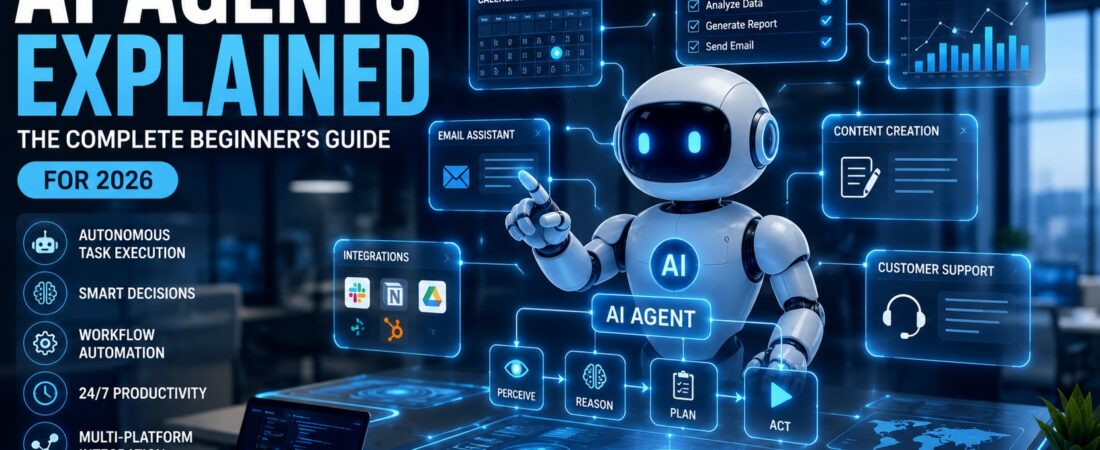
AI agents represent a significant evolution in the field of artificial intelligence, characterized by their ability to perceive their environment, make informed decisions independently, and learn from their interactions. Unlike traditional AI systems, which often rely on predefined rules and static algorithms, AI agents operate in dynamic environments where they engage with their surroundings and adapt their behavior accordingly.
The defining feature of AI agents is their capability to perceive their environment through various sensors, which can include cameras, microphones, and other input devices. This perception enables them to gather data about the world around them, leading to more nuanced interactions. For instance, an AI agent in a smart home setup can analyze audio signals and visual cues to adjust lighting and temperature based on the presence of individuals and their preferences.
Another key component of AI agents is their autonomy in decision-making. Traditional AI may require explicit programming for specific tasks, whereas AI agents are designed to interpret their findings and make decisions without human intervention. This autonomy allows them to respond to fluctuating conditions and user needs in real time, ultimately enhancing their effectiveness in various applications, such as customer service, autonomous vehicles, and personal assistants.
Moreover, AI agents possess the ability to learn from their experiences. They leverage machine learning techniques to improve their performance continuously. By analyzing past interactions and outcomes, they can refine their strategies to yield better results in the future. As a result, AI agents not only execute tasks but also evolve over time, making them well-suited for complex, real-world applications where adaptability is critical to success. This learning capability distinguishes them from earlier AI systems and aligns them with the increasing demands for intelligent automation in various sectors.
How AI Agents Compare to Other AI Tools
Artificial intelligence (AI) is a broad field encompassing numerous tools and technologies. Among these are AI agents, AI chatbots, ChatGPT, and various forms of automation software. While they all leverage machine learning and natural language processing, their applications, designs, and functionalities differ significantly.
AI agents are sophisticated entities designed to perform specific tasks by learning from their environment and user interactions. They can operate autonomously, utilizing their learned experiences to make decisions and provide solutions. This ability gives them a unique advantage in more complex scenarios where adaptive responses are crucial, such as personal assistants or specialized business applications.
Conversely, AI chatbots and ChatGPT are primarily focused on interaction. While they can conduct conversations and provide information, they often rely on predefined scripts or models, which can restrict their adaptability. AI chatbots are commonly used for customer service, answering frequently asked questions, or guiding users through simple transactions, making them excellent tools for engaging users in straightforward situations. ChatGPT, developed by OpenAI, takes this a step further by offering a more nuanced conversation experience, allowing for longer, context-rich interactions. However, it still lacks self-learning capabilities absent from AI agents.
Automation software, on the other hand, focuses on executing repetitive tasks through predefined workflows. Such tools excel at increasing efficiency by minimizing human intervention in routine processes. This type of software is ideally suited for businesses looking to optimize operations rather than requiring user interaction as seen with chatbots and agents.
In practical scenarios, the choice between these tools generally depends on user requirements. When engaging with customers through conversation, chatbots or ChatGPT are often preferable. In contrast, for complex tasks where autonomy and flexible responses are necessary, AI agents outperform their simpler counterparts. For repetitive tasks requiring minimal human oversight, automation software remains the optimal choice.
Types of AI Agents
AI agents can be categorized into various types, each with distinct characteristics and applications that cater to specific tasks and environments. These categories include reactive agents, goal-based agents, learning agents, autonomous agents, and multi-agent systems.
Reactive agents are the simplest form of AI agents. They operate solely based on the current input from their environment, responding to stimuli without retaining any previous experiences. This characteristic makes them effective in situations where straightforward decision-making is required. A common application of reactive agents can be found in robotic vacuum cleaners, which navigate through spaces using sensors to avoid obstacles.
Goal-based agents take this a step further by possessing predefined objectives they aim to achieve. These agents evaluate their actions based on potential outcomes aligned with their goals. For example, AI used in autonomous driving seeks to navigate roads safely while adhering to traffic laws and reaching a destination efficiently. This goal-directed behavior allows for more complex decision-making compared to reactive agents.
Learning agents, as the name suggests, incorporate a learning mechanism that allows them to improve their performance over time through experience. This type of agent adjusts its actions based on historical data and feedback from interactions. Machine learning models used for personalized recommendations, such as those employed by streaming services to suggest content, exemplify learning agents.
Autonomous agents possess a high degree of independence, capable of making decisions and carrying out tasks without human intervention. They are often found in environments such as manufacturing, where robotic arms perform assembly tasks autonomously. This independence enables enhanced efficiency and productivity in various sectors.
Lastly, multi-agent systems involve multiple AI agents interacting with one another, collaborating or competing to accomplish tasks. These systems are frequently utilized in simulations, such as traffic management and climate modeling, where numerous agents operate simultaneously to model complex scenarios. Each type of AI agent plays a significant role in advancing the capabilities of artificial intelligence in real-world applications.
How AI Agents Work Behind the Scenes
AI agents operate through a series of complex, interrelated processes that enable them to function effectively in various environments. One of the primary components of an AI agent’s operation is memory management. This process involves the organization and retrieval of pertinent information, allowing the agent to store experiences and learn from past interactions. For instance, in a customer service setting, an AI agent can recall previous customer inquiries to provide tailored responses, enhancing user satisfaction.
Another critical process is planning, where AI agents strategize actions to achieve specific goals. This is often achieved through elaborate algorithms that predict potential outcomes based on current data. Take autonomous vehicles, for example; they continuously analyze surrounding conditions and formulate safe navigation routes, thereby illustrating the importance of planning in a real-world application.
Reasoning is equally vital, as it allows AI agents to draw conclusions and make informed decisions based on the information at their disposal. This process often incorporates frameworks for logical thinking, which can simulate human-like reasoning capabilities. AI agents can determine whether to recommend a product or service to a user by analyzing preferences and patterns from previous interactions, reinforcing their role in personalized marketing strategies.
Tool usage further amplifies the functionality of AI agents, as they can leverage various applications and platforms to enhance their operational capabilities. For instance, a virtual health assistant can connect with external medical databases to provide users with accurate health information, showcasing how the use of tools can extend an agent’s range of services.
Decision-making encapsulates the culmination of these processes, where AI agents evaluate options and select the most suitable course of action. In industries like finance, AI agents analyze vast amounts of data to identify trading opportunities, thereby showcasing their strategic prowess in generating value. Ultimately, these collective processes empower AI agents to perform effectively, adapting to diverse tasks across multiple sectors.
Real-World Examples of AI Agents
AI agents have become increasingly integral in various industries, driving efficiency and enhancing user experience through automation and intelligent data processing. One of the most notable applications of AI agents is found in customer service. Chatbots powered by AI agents serve as the frontline for customer inquiries, offering 24/7 support and personalized responses. For example, companies like Zendesk utilize AI to optimize customer interactions, significantly reducing wait times and improving overall satisfaction.
In the realm of content creation, AI agents are revolutionizing the way writers and marketers approach their tasks. Tools such as OpenAI’s ChatGPT assist in generating ideas, drafting articles, and even writing code snippets. These AI-driven solutions help professionals streamline the content creation process, allowing for greater focus on conceptual work and strategic planning.
Furthermore, AI agents have made a significant impact on marketing automation. Platforms like HubSpot leverage AI to analyze customer behavior, enabling tailored marketing campaigns that resonate with the target audience. By predicting user engagement, these agents help businesses optimize their advertising efforts, driving higher conversion rates.
In the area of sales generation, AI agents are valuable for identifying leads and nurturing customer relationships. Solutions such as Zia from Zoho utilize predictive analytics to assist sales teams in targeting the right prospects effectively. This strategic assistance enhances conversion rates and expedites the sales process.
Additionally, research disciplines are benefiting from AI agents that can process vast amounts of information rapidly. For instance, tools like IBM Watson analyze data for medical and scientific research, aiding in the discovery of new insights and accelerating innovation.
Lastly, personal productivity applications of AI agents, such as Todoist, help individuals manage their tasks efficiently. By intelligently organizing schedules and reminding users of deadlines, these AI agents enhance productivity and assist users in maintaining work-life balance.
Best AI Agent Platforms in 2026
As artificial intelligence continues to evolve, 2026 presents several robust AI agent platforms tailored for various applications. Among these, OpenAI Agents stands out with its sophisticated language models that facilitate natural conversations and decision-making. The primary advantage of OpenAI Agents is its extensive training on diverse datasets, enhancing its ability to generate accurate and contextually relevant responses. However, one potential drawback is the reliance on cloud infrastructure, which may lead to latency issues in real-time applications.
AutoGPT is another notable platform, primarily known for its automation capabilities. It enables users to set detailed instructions that the AI follows autonomously, making it ideal for routine tasks and workflows. Its ease of use is a significant advantage, enabling non-technical users to benefit from AI. Nonetheless, the complexity of creating comprehensive guidelines for AutoGPT can pose challenges for some users, limiting its accessibility.
CrewAI specializes in team collaboration, providing an interface for seamless interaction among human and AI agents. Its primary advantage lies in enhancing productivity through AI-driven insights and recommendations. However, users may face difficulties integrating CrewAI into existing team structures, particularly in organizations with entrenched workflows.
LangGraph leverages advanced natural language processing to understand and analyze large datasets. Its unique feature is the ability to visualize language data for improved decision-making. Despite its capabilities, LangGraph may require a steep learning curve, potentially deterring novice users.
Microsoft Copilot integrates AI functionalities directly within Microsoft Office applications, offering real-time suggestions that enhance user efficiency. The major limitation is the dependency on the Microsoft ecosystem, restricting its use for professionals using alternative software. On the other hand, Claude-based agents emphasize ethical AI practices, making them suitable for sensitive environments. However, their focus on ethical guidelines might limit their performance in some high-demand tasks.
Finally, Google Gemini presents a versatile platform offering multi-functional applications, from content generation to predictive analytics. Gemini boasts integration with Google services, which is a significant advantage for users familiar with its ecosystem. However, potential users should consider privacy implications when utilizing Google-based platforms.
Benefits and Limitations of AI Agents
Artificial Intelligence (AI) agents represent a transformative force across various sectors, driving numerous benefits. One of the primary advantages of AI agents is their ability to enhance productivity. By automating repetitive tasks, they allow human workers to focus on higher-level functions, thereby improving overall efficiency and output. Additionally, organizations experience significant cost reductions as AI agents tend to operate at a lower cost than human labor, especially over time.
Automation potential is another considerable benefit, as AI agents are capable of executing tasks that require accuracy and consistency. This is particularly evident in industries such as manufacturing and customer service, where AI systems can handle inquiries and manage inventory with remarkable precision. Furthermore, AI agents offer scalability; businesses can deploy more agents easily to handle increased workloads without a proportionate rise in expenses or resources.
However, despite these advantages, AI agents are not without their limitations and risks. One prominent concern is the occurrence of hallucinations—instances where AI generates incorrect or misleading information. This can lead to misinformation and reduced trust in AI systems. Security concerns also loom large; as AI technology becomes more sophisticated, the potential for vulnerabilities to cyber-attacks increases, putting sensitive information at risk.
Data privacy issues arise as AI agents process vast amounts of personal and organizational data. Ensuring compliance with privacy regulations becomes critically important. Moreover, reliance on AI agents can lead to over-dependence, diminishing human skills over time. Finally, ethical issues surrounding decision-making processes pose significant challenges, as the lack of human empathy in AI may result in decisions that do not align with societal values. Understanding these benefits and limitations is crucial for organizations seeking to leverage AI agents effectively.
How to Start Using AI Agents Today
Implementing AI agents into your daily operations can be a rewarding venture that enhances productivity and efficiency. To begin, you need to identify specific tasks or processes that could benefit from automation. Common areas include customer support, data analysis, and routine administrative tasks. By targeting these functions, you can set a clear agenda for how AI agents will assist you.
Once you have identified the tasks, the next step is to select the right AI agent platform. Numerous tools cater to various needs and levels of expertise. For beginners, user-friendly platforms such as ChatGPT, Google’s Dialogflow, or IBM Watson Assistant are great choices. Assess their capabilities to ensure they align with your requirements. Most of these platforms offer extensive documentation and tutorials, simplifying the onboarding process.
After selecting a platform, you should focus on training your AI agent. This involves feeding it relevant data and guiding it through specific use cases. Clear instructions and well-defined objectives are crucial during this phase, as they significantly affect the agent’s performance. Utilize available resources, including online courses or community forums, to refine your approach and troubleshoot any issues that arise.
Next, integrate the AI agent with your existing systems. APIs are often used for seamless connections, allowing agents to access relevant data and perform tasks effectively. Monitor the agent’s performance during the initial rollout, gathering feedback to refine its algorithms and abilities over time.
Lastly, educate your team about the AI agent’s functionalities and encourage a culture of automation. Providing training sessions will empower them to utilize the AI effectively. With proactive engagement and continuous improvement, your journey into the realm of AI agents can lead to substantial operational advancements.
Future of AI Agents: Predictions for 2027–2030
As we look toward the years 2027 to 2030, several emerging trends in AI agents are anticipated to reshape various sectors. The development of AI technology is expected to accelerate, leading to advancements that enhance the functionality and autonomy of AI agents. These agents will likely become more integrated into daily operations across industries, driving significant changes in business practices and decision-making processes.
One prominent trend is the advancement of machine learning algorithms, which will enable AI agents to process and analyze vast amounts of data with greater accuracy. This capability will allow them to provide more precise insights, enabling businesses to make data-driven decisions faster than ever. Additionally, improvements in natural language processing will allow AI agents to communicate more effectively with human users, enhancing collaboration and operational efficiency.
Another key prediction involves the rise of autonomous AI agents. As technologies such as robotics and IoT (Internet of Things) evolve, AI agents are expected to take on more physical tasks, particularly in manufacturing, logistics, and healthcare. The ability for agents to operate independently will transform business models by reducing the need for human intervention and increasing productivity levels.
Furthermore, the ethical considerations surrounding AI agents will also become more pronounced. As their role in society expands, businesses will need to navigate compliance with regulations regarding data privacy and algorithmic transparency. Public trust in AI technologies will heavily influence their adoption, necessitating organizations to prioritize ethical AI practices.
In conclusion, the future of AI agents from 2027 to 2030 presents a transformative landscape, characterized by enhanced capabilities, increased automation, and a focus on ethical implementation. Businesses that adapt to these trends will likely gain a competitive edge in their respective markets as AI continues to permeate various aspects of economic activity.
Frequently Asked Questions (FAQ)
1. What is an AI agent?
An AI agent is a software entity that uses artificial intelligence to perform tasks or simulate human behavior. They can interact with their environment, learn from experiences, and adapt their actions to achieve specific goals.
2. How do AI agents function?
AI agents utilize various technologies such as machine learning, natural language processing, and computer vision, allowing them to process data, recognize patterns, and make decisions based on input data.
3. What are the different types of AI agents?
There are several types of AI agents, including reactive agents that respond to stimuli, deliberative agents that plan their actions based on goals, and hybrid agents that combine both approaches to enhance efficiency and effectiveness.
4. Where are AI agents commonly used?
AI agents are found in numerous applications, including customer service chatbots, virtual assistants like Siri and Alexa, autonomous vehicles, predictive maintenance in industries, and even healthcare for patient diagnosis.
5. What are the advantages of using AI agents?
AI agents can increase efficiency, reduce human error, provide 24/7 support, and analyze large datasets quickly. They can also scale processes that would otherwise require significant human labor.
6. Are AI agents capable of learning over time?
Yes, many AI agents are built with machine learning capabilities, allowing them to learn from past actions and improve their performance without requiring explicit programming for each task.
7. What challenges do AI agents face?
AI agents may encounter challenges such as biased data leading to flawed decision-making, limitations in understanding complex human emotions, and privacy concerns regarding data usage.
8. Will AI agents replace human jobs?
While AI agents may automate routine tasks, they are more likely to augment human work by taking over repetitive functions, allowing individuals to focus on more complex and creative aspects of their jobs.
9. What is the future outlook for AI agents?
The future of AI agents appears promising, with advancements in technology enabling more sophisticated functionalities, increased use across industries, and a growing emphasis on ethical AI development and deployment.
10. How can beginners get started with AI agents?
Beginners interested in AI agents can start by exploring online courses on AI fundamentals, participating in coding bootcamps, and engaging with communities that focus on AI technologies to gain hands-on experience.
Conclusion
AI agents represent a transformative force across various sectors, enabling individuals and organizations to enhance productivity and efficiency. As outlined in this guide, these intelligent systems can perform routine tasks, leverage data for decision-making, and provide personalized experiences, thus revolutionizing the way we interact with technology.
Throughout this exploration, we have defined AI agents, illustrated their various types, and showcased practical applications that span from customer service automation to complex analytical tasks. The benefits of utilizing AI agents are increasingly evident; they not only streamline processes but also allow human resources to focus on higher-value activities that require creative and strategic thinking. Indeed, the integration of AI into daily operations can yield substantial enhancements in performance and competitiveness.
For those seeking to engage with these advanced technologies, it is advisable to start by identifying specific areas within your domain that could benefit from AI-driven solutions. Whether exploring chatbots to improve customer interactions, deploying virtual assistants for administrative tasks, or analyzing data with predictive models, taking small, manageable steps can make the integration of AI agents not only achievable but also beneficial.
It is essential to stay informed about emerging trends and advancements in AI technology. Consider participating in workshops, webinars, or online courses focused on AI to further enhance your understanding and capability in leveraging AI agents effectively. By investing time in learning about these systems, you position yourself at the forefront of innovation in your respective field.
In summary, as AI agents continue to evolve, embracing their functionalities can contribute significantly to personal and organizational success. Engaging actively with AI technology today will prepare you to harness its full potential tomorrow.