Introduction
The year 2026 has witnessed an unprecedented acceleration in the development and deployment of artificial intelligence (AI) tools. With the integration of AI technologies into various sectors, the demand for efficient, user-friendly solutions has surged. As businesses and individual users alike seek to harness the power of AI, the need for accessible tools has become more pronounced. This has led to a significant portion of the user base actively searching for free AI options that offer substantial functionality without the barrier of high costs.
Despite the proliferation of paid AI services, which often boast enhanced features and support, many users remain steadfast in their pursuit of free alternatives. The rationale behind this trend spans several user groups, including students, hobbyists, startups, and established businesses looking to optimize costs without sacrificing quality. For students and freelancers, free AI tools represent a more viable option that facilitates learning and innovation. In this rapidly evolving technological landscape, accessible AI solutions have emerged as critical resources for a diverse audience.
Many free AI tools now deliver impressive capabilities, often rivaling their paid counterparts in terms of functionality, ease of use, and effectiveness. These tools encompass a wide array of applications, ranging from content creation to data analysis, providing users with valuable assets to enhance productivity without the financial commitment. The ongoing growth in the AI sector signifies that robust free solutions will continue to evolve, leading to improved performance and increased accessibility for all users.
Selection Criteria for Free AI Tools
In determining the top 20 AI tools that are completely free in 2026, several key criteria were employed to ensure a comprehensive and reliable selection process. The focus was not only on the tools’ capabilities and features but also on their accessibility and overall user experience.
The first criterion considered was ease of use. Tools that offer a user-friendly interface and intuitive navigation were prioritized, as these aspects greatly enhance the experience for both novices and experienced users. Conducting user surveys and analyzing user feedback helped evaluate this attribute effectively.
Next, the features of each tool were critically assessed. The selection process took into account the range of functionalities offered, such as natural language processing, machine learning capabilities, and data analytics features. Tools that provided unique or advanced functionalities were favored, as they tend to meet a wider array of user needs.
Popularity and user base also played a crucial role. Tools that are widely adopted within the community often indicate reliability and effectiveness. Metrics such as user ratings, reviews, and download counts were analyzed to quantify this aspect, thereby helping to gauge trust in each tool.
Additionally, the reliability of each tool was examined. Tools that have shown consistent performance over time, with regular updates and technical support, were more likely to be included in the final selection. This consideration is pivotal for users who rely on the tools for ongoing projects or professional use.
Lastly, the limitations of free access were carefully reviewed. It was essential to identify tools that, while free, do not compromise significantly on functionality or support. Some tools might impose usage caps or restrict advanced features; understanding these limitations allowed for a more informed selection process.
Top 20 Completely Free AI Tools in 2026
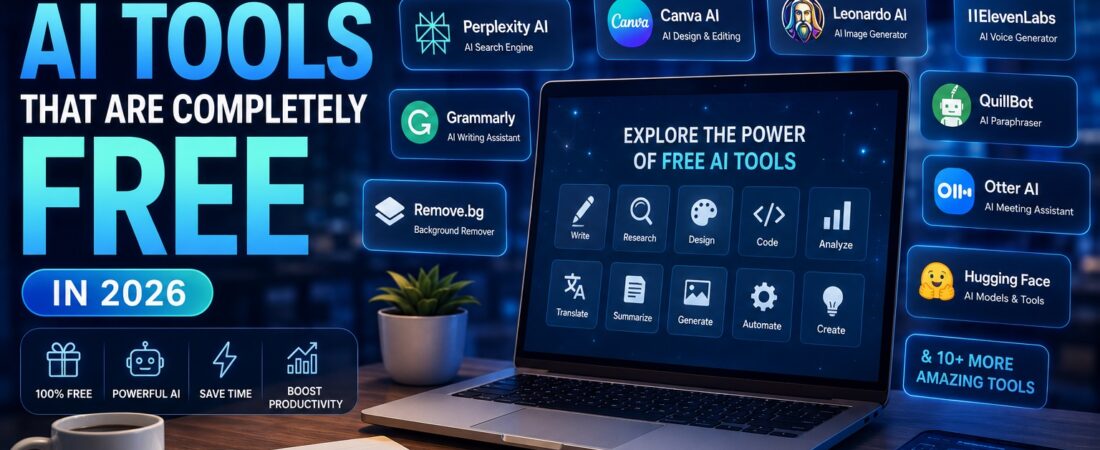
As artificial intelligence continues to evolve and permeate various industries, a growing number of AI tools are being made available to users at no cost. This fosters innovation and enables individuals and startups to harness the power of AI without significant financial burdens. Below, we present a meticulously curated list of the top 20 free AI tools for 2026, each featuring unique capabilities tailored to diverse user needs.
1. OpenAI GPT-3 Playground
A versatile natural language processing tool that allows users to generate human-like text based on prompts. It is particularly suitable for writers and marketers. Key features include text generation, language translation, and summarization. The free plan provides access with usage limits, promoting experimentation.
2. TensorFlow
An open-source machine learning framework extensively utilized by researchers and developers alike. TensorFlow allows for building and training neural networks, and its free plan enables extensive learning, though additional computing resources may incur costs.
3. IBM Watson Assistant
This conversational AI tool helps users build chatbots capable of engaging in fluid dialogues. Its free plan includes limited monthly interactions, best suited for small businesses or individual projects seeking to enhance customer engagement.
4. Lobe
A user-friendly tool that simplifies AI model training. Lobe is ideal for beginners as it requires no coding skills. Users can create custom models for tasks such as image classification using datasets without any payments.
5. Hugging Face Transformers
A robust library that facilitates the deployment of state-of-the-art machine learning models, particularly in NLP. Hugging Face is beneficial for developers and researchers focusing on language models, with its free resources enabling access to numerous pre-trained options.
Each of the tools listed above offers a blend of amazing functionalities at no cost, allowing users to explore AI capabilities effectively. While some resources may have usage restrictions, the free tiers enable experimentation and implementation across various applications. For individual users, teams, or organizations exploring AI solutions, these tools are valuable assets for development and innovation.
Best Free AI Tools by Category
As artificial intelligence continues to advance and permeate various sectors, numerous free tools have emerged that cater to specific needs. This section provides a categorical overview of these tools, highlighting their primary functions and the advantages they offer in different domains.
Writing: For individuals seeking assistance with writing tasks, several AI tools can be extremely beneficial. Tools like Grammarly help enhance grammar and style, preserving the tone while making suggestions for improvement. In contrast, Writesonic offers AI-generated content, making it an excellent choice for marketers and writers alike who need engaging material on short notice.
Research: Students and researchers can benefit greatly from AI-driven databases and search tools. Semantic Scholar and Google Scholar leverage AI to offer tailored searches, helping users find relevant academic papers based on their specific queries. These tools often synthesize vast amounts of information, providing summaries and key insights.
Students: Learning is a multifaceted endeavor, and AI tools geared towards students support various study methods. Quizlet uses AI to create intelligent study flashcards, while Grammarly can assist in writing essays and reports.
Image Generation: Creative professions can utilize free AI art generators like DALL-E Mini or Artbreeder. These tools allow users to generate unique images based on textual descriptions or blend existing images, facilitating artistic exploration without the need for advanced graphic skills.
Coding: Developers looking for coding assistance can leverage tools such as GitHub Copilot or Replit, which offer coding suggestions and templates for various programming languages, streamlining the coding process.
Business: For business-related applications, tools like OpenAI’s Chatbot can assist with customer service inquiries, while Zapier facilitates task automation across various applications, enhancing efficiency and productivity.
Productivity: Finally, a range of tools like Todoist and Notion help users organize their tasks and projects. These platforms integrate AI features to prioritize tasks and improve time management, ensuring that productivity remains the focal point.
Are Free AI Tools Good Enough?
In recent years, the rise of artificial intelligence (AI) has led to an influx of tools designed to assist in various tasks, many of which are available at no cost. However, the question that often arises is whether these free AI tools are genuinely capable of competing with their paid counterparts. While free tools may offer varying levels of functionality and efficiency, understanding the pros and cons is essential when evaluating their suitability for different applications.
One of the primary advantages of free AI tools is the accessibility they provide. Users, especially individuals or small businesses with limited budgets, can benefit from such tools without incurring financial expenses. Additionally, they often come equipped with basic features that can serve the needs of casual users or those looking to explore the potential of AI technology without committing to a paid subscription.
However, free AI tools may lack advanced functionalities and features that are typically found in the paid versions. For instance, while a free tool may offer sufficient performance for simple tasks, it may not support complex operations, high-volume processing, or integration with other advanced systems. Furthermore, users of free tools may encounter limitations such as less customer support, fewer customization options, and reduced update frequency.
Moreover, users must be aware of the potential limitations regarding data privacy and security. Many free AI tools may utilize user data for advertising or enhancement of their services, raising concerns about the ethical usage of personal information.
Ultimately, whether free AI tools are good enough depends on the user’s specific requirements and the nature of the tasks at hand. For those who prioritize more advanced features and dedicated support, investing in paid AI tools may be worthwhile. Conversely, for basic applications, free AI tools may provide a satisfactory solution, enabling users to harness the benefits of artificial intelligence without financial strain.
Hidden Limitations of Free AI Tools
While free AI tools offer extraordinary capabilities, users should be aware of several hidden limitations that may impact their overall experience. Understanding these restrictions can help users make informed decisions about their AI tool usage.
One prevalent limitation of free AI tools is the usage cap. Many platforms restrict the amount of output or the number of tasks that can be executed within a designated time frame. This can be particularly challenging for users who need to perform extensive or time-sensitive tasks, leading to interruptions or unmet project deadlines.
Additionally, free versions often come with feature restrictions. While some essential functionalities may be available, advanced features may require a subscription or a one-time payment. Consequently, users may find themselves unable to access certain capabilities that could enhance their productivity or the quality of their output, thereby limiting the overall utility of the tool.
Another common drawback is slower response times. Free AI tools may experience delays in processing requests due to high user traffic or limited server resources. This lag can be frustrating, particularly when quick responses are critical to the user’s workflow. As such, users should be prepared for potential slowdowns during peak usage times.
Lastly, many free AI tools incorporate watermarks or other branding elements in the generated content. This can detract from the professional appearance of the outputs and affect how the content is perceived by viewers. Consequently, users aiming for polished and market-ready materials might find this aspect particularly limiting.
Overall, while free AI tools can significantly assist users, recognizing these hidden limitations is crucial for effective utilization and expectation management.
Building an Entire Workflow Using Free AI Tools
In today’s digital landscape, harnessing AI tools can substantially enhance the efficiency of various tasks across multiple domains. By strategically integrating free AI tools, one can construct a comprehensive workflow for tasks such as research, writing, editing, design, and voiceovers without incurring any costs. This section outlines a step-by-step approach using selected free AI tools.
To initiate a workflow, beginning with research is essential. Utilizing a free AI research tool, such as Google Scholar, enables users to gather academic papers and articles effectively. This tool allows for the synthesis of information, which enhances the foundational knowledge needed for writing tasks. Once the research is compiled, the next step involves crafting the content using a free AI writing tool like OpenAI’s Playground or similar alternatives. These platforms simplify the writing process, allowing for the creation of drafts quickly and efficiently.
After drafting the content, editing is crucial to ensure quality. Tools such as Grammarly’s free version can help refine the writing by correcting grammar and enhancing clarity. Additionally, integrating AI editing tools can facilitate a comprehensive review, ensuring the writing is coherent and compelling.
For those specializing in design, using free AI graphic design tools like Canva allows users to bring visual elements to life with ease. Users can create infographics, social media posts, or presentations without needing advanced design skills. Finally, incorporating free AI voiceover tools like Descript or ReadSpeaker can significantly enhance presentations by converting text to speech.
This synergistic approach demonstrates how free AI tools can be woven together to build an entire workflow. By leveraging these resources effectively, users can manage various aspects of their projects seamlessly and cost-effectively.
Future of Free AI Tools
The landscape of artificial intelligence (AI) is continuously evolving, and the coming years will reveal significant advancements in free AI tools. As we look ahead to 2027 through 2030, the development of these tools is expected to encompass a broader scope of applications and increased sophistication not previously imagined. With the help of open-source contributions and community collaborations, we will likely see enhancements surrounding accessibility, functionality, and user experience.
In the realm of productivity, for instance, AI tools will increasingly integrate with other software applications, providing seamless workflows and advanced automation processes. This integration can promote more efficient task management for individuals and small businesses alike. As AI capabilities improve in natural language processing and machine learning, users can anticipate tools that not only respond to commands but also learn from interactions to enhance the overall experience.
Moreover, the societal impact of these free AI tools will be profound. With greater accessibility to AI resources, marginalized communities and individuals will have opportunities to leverage technology that was previously out of reach. This democratization of technology could lead to new innovations as diverse voices and perspectives contribute to the development of AI systems, creating a more inclusive digital future.
Additionally, advancements in ethical considerations and policies surrounding AI will likely play a critical role in shaping the future landscape. As free AI tools become more prevalent, discussions regarding privacy, data security, and responsible usage will take center stage, prompting developers to embed safeguards and ethical frameworks within their offerings.
In essence, the trajectory of free AI tools in the next decade will signify a convergence of technological advancement and increased societal engagement, setting a new standard for innovation and accessibility.
Frequently Asked Questions
1. What are free AI tools? Free AI tools are applications or software that utilize artificial intelligence technology and are available to users at no cost. They are often used for various purposes, including data analysis, content creation, and machine learning tasks.
2. Are all free AI tools effective? While many free AI tools can be effective for specific tasks, their performance may vary. It is essential to assess user reviews and test different tools to find the best fit for your needs.
3. Do free AI tools have limitations? Yes, free AI tools often come with limitations such as restricted features, usage quotas, or lack of support. Users should be aware of these limitations before integrating them into their workflow.
4. How do I choose the right free AI tool? To choose the right free AI tool, consider your specific needs, the tasks you want to accomplish, and read user reviews. Evaluate the features offered and test a few to find the most suitable option.
5. Can I trust free AI tools with sensitive data? Trusting free AI tools with sensitive data may pose risks. Always review the privacy policies and security measures of the tools before usage and consider using paid services for confidential information.
6. Are free AI tools suitable for businesses? Free AI tools can be suitable for small businesses or startups with limited budgets. However, larger organizations may require more advanced features and support found in paid AI solutions.
7. Is there any difference between free and paid AI tools? Generally, paid AI tools offer more features, better customer support, and fewer restrictions than their free counterparts. Users must evaluate their needs against the capabilities of each option.
8. How often are free AI tools updated? The update frequency of free AI tools can vary based on the developer. Some tools receive regular updates to improve functionality, while others may not be consistently maintained.
9. Can I integrate free AI tools with other software? Many free AI tools offer integration options with other software through APIs. Always verify compatibility with third-party applications to ensure seamless usage.
10. Are there community support options for free AI tools? Yes, many free AI tools have user communities or forums that provide support and share experiences. Utilizing these resources can enhance your understanding and usage of the tool.
11. What kind of tasks can I accomplish with free AI tools? Free AI tools can assist with various tasks such as text generation, image processing, data analysis, automated responses, and more, depending on the specific tool’s capabilities.
12. How can users provide feedback on free AI tools? Users can typically provide feedback through official websites, social media channels, or community forums. Feedback helps developers improve the tools and address user needs.
13. Are there any legal issues surrounding free AI tools? Legal issues may arise regarding data use, intellectual property, or licensing. Users should familiarize themselves with legal terms and conditions before utilizing any tool.
14. Do free AI tools require technical skills to use? While some free AI tools are designed for users with technical expertise, many are user-friendly and accessible to individuals with basic computer skills, making them widely usable.
15. How can I stay informed about new free AI tools? To stay informed about new free AI tools, follow technology blogs, subscribe to newsletters, join AI-related forums, or participate in industry webinars and conferences.
Conclusion
In the evolving landscape of artificial intelligence, numerous free tools have emerged that cater to a wide array of user needs. From freelancers seeking efficient content generation to businesses looking for cost-effective customer service solutions, the availability of zero-cost AI tools has democratized access to advanced technology. Among the top contenders for 2026 are platforms that specialize in content creation, data analysis, machine learning, and design enhancements.
For writers and content creators, tools such as GPT-3 Playground and Canva AI provide valuable resources that streamline the creative process. They not only save time but also enhance the quality of output, making them indispensable for professionals in the content industry. Meanwhile, those in need of analytics solutions can turn to Google Analytics and DataRobot, which offer robust capabilities for data interpretation without any associated fees.
In the realm of customer support, tools like Chatbot.com and HubSpot CRM furnish businesses with efficient, automated systems to manage inquiries effectively, thereby enhancing customer satisfaction while minimizing expenses. Furthermore, developers and data scientists can leverage tools like Keras and TensorFlow to experiment with machine learning models, ensuring that they remain at the cutting edge of AI technology without financial burden.
Ultimately, the best free AI tools for your needs will depend on your unique requirements, whether they pertain to content generation, analysis, design, or customer engagement. Exploring these options not only empowers individuals and organizations to innovate but also illustrates the significant value that these free solutions offer in various contexts, encouraging continuous exploration and adaptation in the pursuit of efficiency and creativity.